
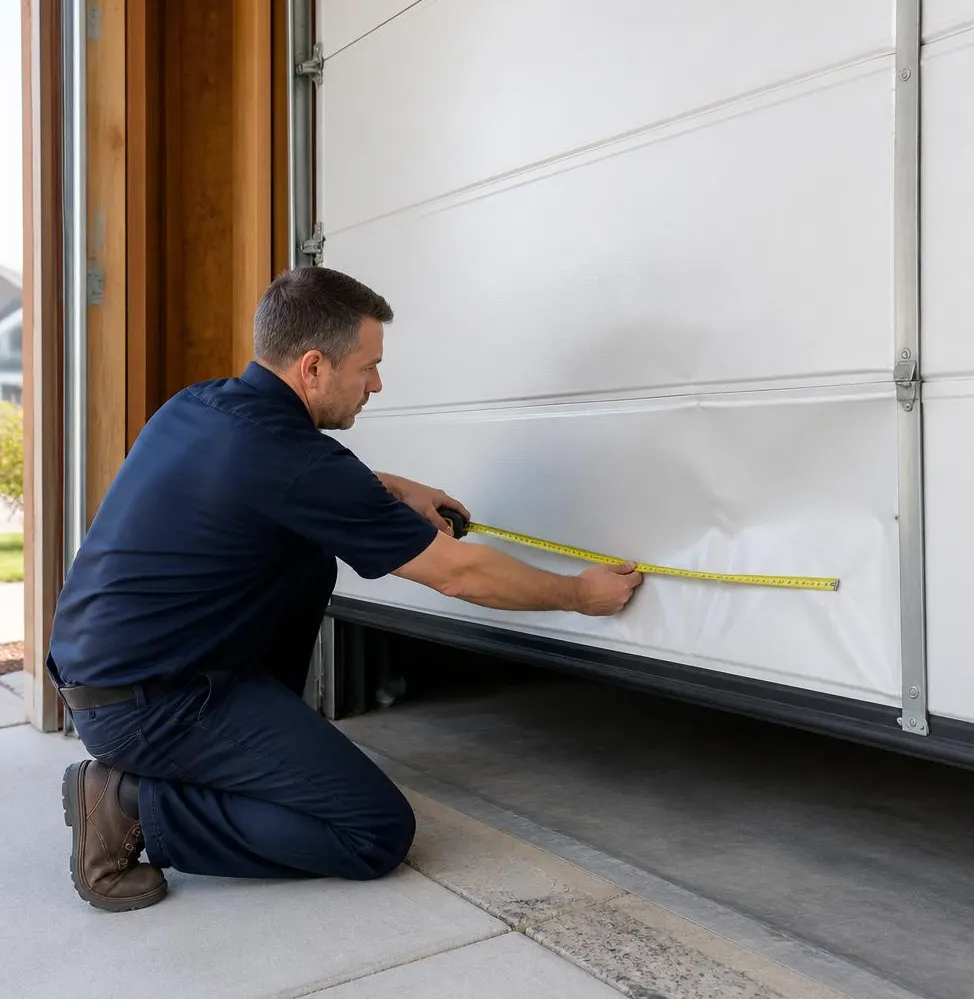
What a Technician Sees on This Call Around Rome
The call usually comes in right after the first hard freeze or the morning after a nor'easter dumped wet, heavy snow. The homeowner presses the remote, the door comes down a foot or two, then reverses back up on its own. Or it won't move past the open position at all. Sometimes it worked fine all summer and just stopped cooperating once temperatures dropped. By the time a technician arrives, there's often a telltale ring of refrozen slush at the base of the track, or the sensor lenses are fogged over from the swing between a cold garage and humid outside air.
Safety Sensor Problems (the First Thing Checked)
Every opener built in the last few decades has two small photo-eye sensors mounted a few inches off the floor on each side of the track. If the beam between them is broken, or even just partially blocked, the opener reverses the door as a safety measure. This is the single most common cause of a door that won't close.
- Salt film and road grime kicked up from tires or tracked in on boots can coat the lenses over a winter.
- Condensation forms on the lenses when a cold garage meets warm, humid air, especially in spring and fall.
- Bumped brackets from a shovel, snowblower, or stored bike can knock the sensors out of alignment just enough to break the beam.
The fix is simple but precise: wipe both lenses with a soft, dry cloth, confirm both indicator lights are solid (not blinking), and realign the brackets so the sensors face each other squarely. A technician also checks the wiring at the connectors, since a garage floor that gets wet from melting snow can corrode those connections over time.
Travel Limits and Close-Force Settings
Openers are programmed with limits that tell the motor how far to travel and how much resistance to tolerate before assuming it hit an obstruction. Older openers, common in this area's older housing stock, often use mechanical limit switches that drift with seasonal temperature swings. A door that closed fully in August can start hitting resistance and reversing in November, not because anything is broken, but because the door frame has contracted slightly or the grease in the track has stiffened in the cold.
The fix is a limit and force reset, adjusted to the door's current weight and the season. This is a quick adjustment, but guessing at it without the right tools can make the problem worse or create a pinch hazard.
Track Alignment and Ice Buildup
Freeze-thaw cycles are hard on concrete slabs and the anchors that hold garage door tracks in place. Over a winter, frost heave can shift a track just enough to cause binding. More often, though, the culprit is simpler: meltwater runs under the door during the day and refreezes into a ridge overnight. The door comes down, contacts the ice, and reverses.
A bent track section, from a car bumper, a snowblower, or stored equipment in the garage, can also catch a roller partway through the cycle. The fix involves clearing ice before running the door, checking the track with a level, and re-anchoring or straightening any section that's out of plumb.
Rollers, Hinges, and Hardware
A lot of doors in this area still run on original steel rollers rather than nylon, and steel rusts fast once salt-laden slush gets tracked onto the garage floor and splashes up into the track. Stiff or rusted rollers create extra resistance as the door travels, which can trip the opener's force sensor and cause a reversal even though nothing is actually blocking the door.
The fix is cleaning and lubricating with a garage-door-specific lubricant, not household spray oil, which washes away quickly and attracts grit. Rollers that are pitted or flat-spotted get replaced, and loose hinges get tightened or swapped.
Weak or Broken Torsion Springs
Torsion springs counterbalance almost all of the door's weight, so the opener only has to manage a small fraction of it. Cold doesn't usually snap a spring outright, but constant cycling through humid summers and icy winters wears springs down over their service life. A door with a weakening spring feels noticeably heavy if lifted by hand, and the opener strains to compensate, hitting its force limit and reversing before the door fully closes.
Spring replacement is not a DIY repair. The springs are under enough tension to cause serious injury if released incorrectly. A technician relieves the tension safely and installs a replacement sized to the door's actual weight.
When the Opener Itself Is the Problem
On older openers, a worn circuit board can start misreading sensor signals even when the sensors themselves test fine individually. This often shows up as an intermittent reversal, especially after a power flicker during a storm. If cleaning sensors, clearing ice, and adjusting limits doesn't solve it, the board itself may need diagnosis or replacement.
When to Call Rome Garage Door
If you've wiped the sensor lenses, cleared the ice, and the door still won't close, or if it feels unusually heavy when you lift it by hand, it's time to call. Rome Garage Door handles garage door repair for sensor, track, and opener issues on site, and performs spring replacement with the correct tools and safety equipment for doors of any age.
If your door is reversing, sticking, or refusing to close, call Rome Garage Door. We serve Rome, Utica, Marcy, Lee Center, Taberg, Camden, Whitesboro, and Oriskany, and we'll get it diagnosed and fixed before the next cold snap.